
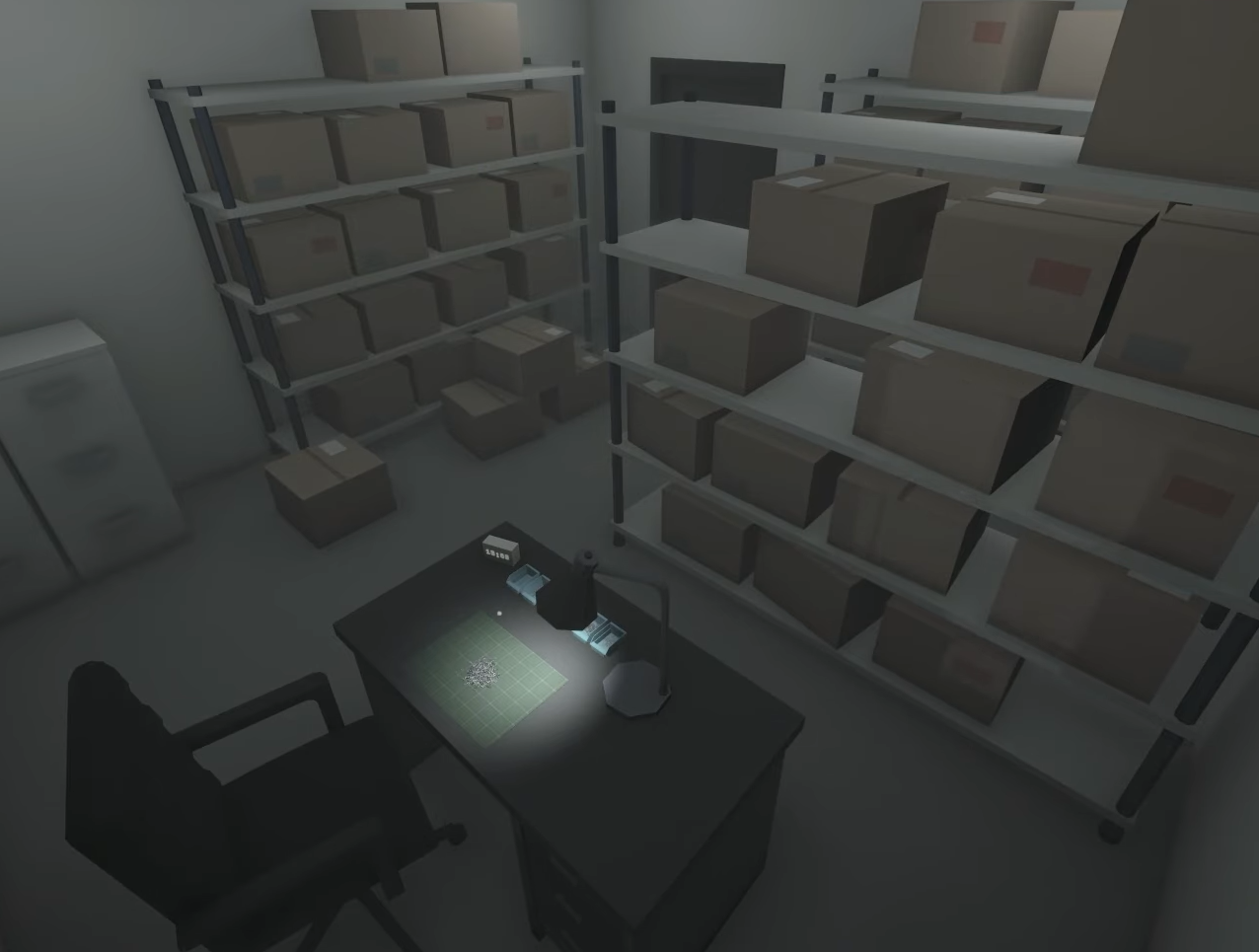
Usually, when I boot up a video game, it’s to escape reality. I want to be the Dragonborn shouting mountains apart, a space marine saving the galaxy, or at the very least, a surprisingly athletic plumber rescuing a princess. I want power, agency, and a clear path to heroism.
Recently, however, I stumbled into a strange subgenre of gaming that offers the exact opposite experience. Let’s call it the “Low Value Job Game.”
These aren’t high-stakes simulations like Flight Simulator or complex management games like Cities: Skylines. These are games that simulate the grind—the repetitive, often minimum-wage, thankless tasks that make up the backbone of the real-world economy. Think stacking boxes in a warehouse, stamping papers at a border crossing (looking at you, Papers, Please), or flipping digital burgers for pennies.
On the surface, playing these games sounds like a nightmare. Why would anyone finish an eight-hour workday only to come home and pretend to work another one?
Yet, there is something strangely compelling about the digital grind. Here is a look at why we are drawn to the “Low Value Job Game” and what it says about our relationship with work.
The Anti-Power Fantasy
Modern gaming is dominated by the “power fantasy.” You are the chosen one, uniquely capable of changing the world. The Low Value Job Game is the “anti-power fantasy.”
In these games, you are replaceable. If you don’t stack those boxes efficiently, someone else will. You are a tiny cog in a massive, indifferent machine.
Oddly, this lack of pressure can be freeing. When you aren’t responsible for saving the universe, you can just focus on the task at hand. There’s a perverse kind of zen in perfectly organising a digital stockroom or hitting a rhythm during data entry. It’s gaming stripped of its ego, reducing the experience to pure, unadulterated process.
Control in a Chaotic World
In real life, “low-value” jobs are often stressful, not just because of the work, but because of the precarity. The pay is low, the managers are demanding, and job security is nonexistent.
The game version offers something reality doesn’t: total control within a safe environment. The boxes will never actually fall on you. The angry digital customer can’t actually get you fired. You can pause the grind whenever you want.
These games distil the act of labour without the consequences of real-world employment. It allows us to experience the rhythm of work in a vacuum, transforming stressful monotony into manageable tasks that we can master.
A Satire of the Grindset
You can’t talk about these games without acknowledging the inherent satire. Many of them are deliberately designed to critique late-stage capitalism, the gig economy, or hustle culture.
By gamifying mundane tasks and rewarding us with meagre digital currency (or sometimes nothing at all), these games hold up a mirror to our real lives. They force us to ask uncomfortable questions:
- Why do we derive satisfaction from watching a digital number go up?
- How much of our real lives are spent doing things that feel ultimately meaningless?
- What is “value,” actually?
When you spend an hour in a game earning $12 of fake money to buy a fake hat for your avatar, the absurdity of consumerism becomes hilariously clear.
The Verdict: Embracing the Mundane
Are Low Value Job games “fun” in the traditional sense? Often, no. They can be boring, frustrating, and repetitive—by design.
But they are fascinating. They offer a unique space to reflect on labour, boredom, and the strange satisfaction of a job done adequately. In a world obsessed with being exceptional, sometimes it’s nice to just log in, clock in, and be perfectly average for a while.
Now, if you’ll excuse me, I have a virtual shift starting at the pixelated fulfilment centre. Those boxes won’t stack themselves.
Low Value Job on Steam – https://shorturl.at/DA99l
#LowValueJob #DistillateGK #YayoiDevelopment #dystopia #simulationgame #Steam #games #gaming #gamers #videogames
Leave a Reply